
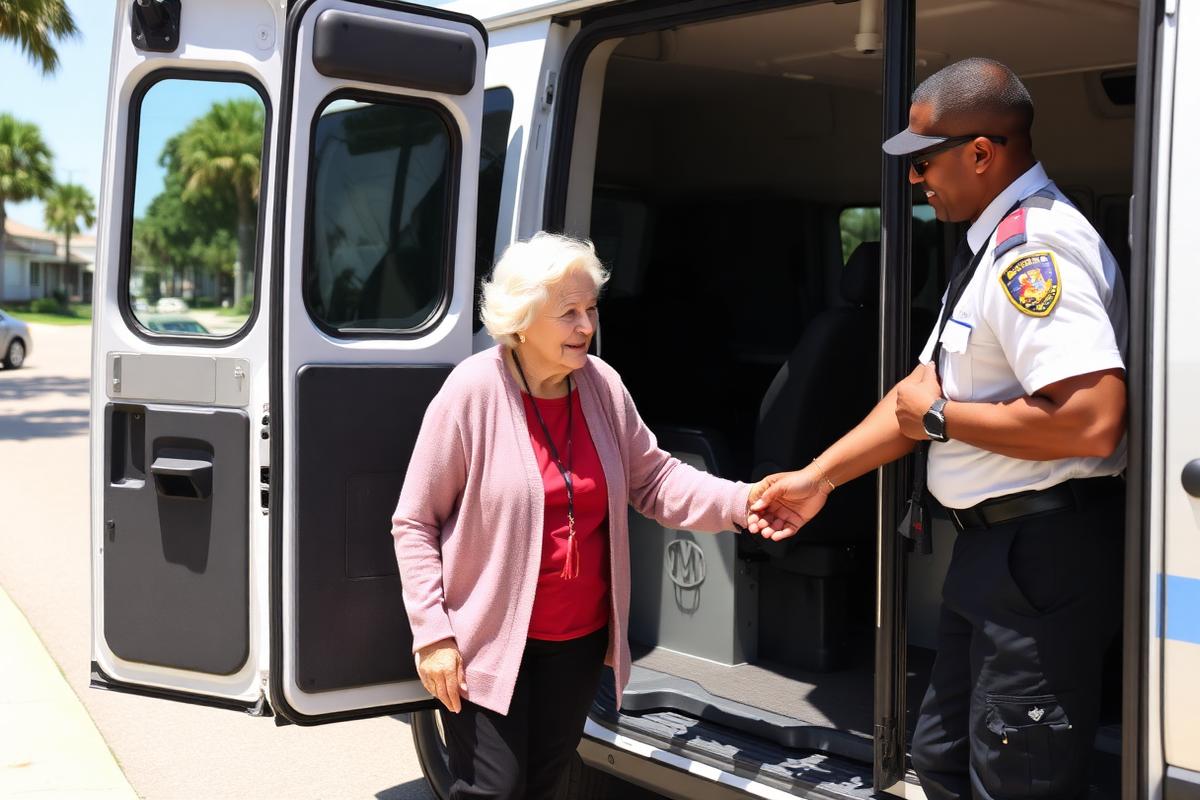
Pickup windows and return rides are two of the most misunderstood parts of medical transportation, mostly because they don't work the way a rideshare app does. There is no single dot moving toward a house on a map; there is a driver working through a list of scheduled trips across Jacksonville and the surrounding counties, and the timing of any one trip depends on the trips around it. Understanding how that scheduling actually works makes the whole process less stressful.
Why pickup windows exist instead of exact times
A dispatcher building a day's schedule has to account for drive time between stops, how long an appointment is likely to run, and how unpredictable traffic is on any given corridor, whether that's I-295 near the Buckman Bridge or Beach Boulevard during a summer afternoon storm. Building in a window, rather than promising an exact minute, is what allows that schedule to hold together even when one piece of it shifts slightly.
This isn't a way of avoiding commitment; it's an acknowledgment that a fifteen-mile trip across Jacksonville can take twenty minutes or forty-five depending on the time of day and the route. A pickup window of roughly fifteen to thirty minutes gives the driver room to absorb small delays without every trip after it falling behind.
What actually determines the length of the window
Distance is one factor, but it isn't the only one. A pickup in downtown Jacksonville during the morning commute may get a tighter window because the driver is already close by, while a pickup out toward Fernandina Beach or St. Augustine may get a wider window simply because there's more distance for something to change along the way.
The number of other trips scheduled around a pickup also matters. A driver coming directly from dropping off another rider a few minutes away can offer a narrower window than one who has a longer trip beforehand, which is part of why dispatch tries to route drivers who are already working near a given neighborhood.
How long a driver waits, and when a wait-and-return trip makes sense
For quick visits, a wait-and-return arrangement keeps the driver on-site so the same vehicle takes the patient home right after the appointment. This works well for short lab draws, quick follow-ups, or brief imaging appointments where the visit length is predictable and short.
For anything longer, the driver is typically released to serve other riders rather than sit idle in a parking lot for hours, since that would mean fewer vehicles available for everyone else needing a ride that day. In those cases, the return trip is scheduled separately, either for an estimated time given at booking or as a call-when-ready pickup.
Call-when-ready pickups for unpredictable appointments
Infusion sessions, same-day procedures, and hospital discharges are notoriously hard to time exactly, since a patient's actual finish time depends on how the appointment goes, not on a schedule set the day before. Call-when-ready pickups solve this by having the patient or facility staff call dispatch once discharge or completion is confirmed, at which point a driver is sent based on real-time availability.
This approach trades a small amount of wait time after the call for a much lower risk of a driver arriving too early and sitting around, or arriving before the patient is actually ready to leave. For hospital discharges specifically, this coordination often happens directly between a facility's discharge planner and dispatch rather than the patient having to manage the timing themselves.
What happens when a trip runs behind
If traffic, a bridge slowdown, or a backed-up schedule pushes a pickup outside its window, the expectation is that dispatch or the driver communicates that rather than leaving the rider to wonder. A short delay of a few minutes rarely needs a phone call, but anything that meaningfully changes the arrival time should be communicated proactively.
Riders with a hard deadline, such as a specific appointment check-in time or a connecting ride to catch, should mention that when booking so dispatch can build in extra buffer rather than cutting it close on a day when nothing can go wrong.
Planning around Jacksonville's specific traffic patterns
Certain times and places in Northeast Florida are worth planning around specifically: the Fuller Warren and Buckman bridges during weekday rush hours, downtown Jacksonville around hospital shift changes, and Beach Boulevard or Atlantic Boulevard during a summer thunderstorm. None of these make a trip impossible, but they are exactly the kind of thing that widens a realistic pickup window.
For patients who travel the same route repeatedly, like a regular trip from Orange Park to a Jacksonville dialysis clinic, dispatch can often refine the pickup window over time based on how that specific route has performed on past trips, which tends to make recurring pickups more consistent than a first-time trip.